Can Adjustable Dumbbells Be Dropped?
Can Adjustable Dumbbells Be Dropped? Developing Stealth Block
Adjustable dumbbells solve one of the biggest problems in home strength training. They replace a full rack of fixed weights with one compact pair.
However, one concern appears repeatedly whenever adjustable dumbbells are discussed:
What happens if you drop them?
It is a valid concern. Heavy dumbbells do not always return gently to the floor, particularly after demanding presses, rows or sets taken close to failure.
Stealth Block is our technological solution to that problem.
It is a more impact-resistant adjustable dumbbell system, engineered to survive a drop at full weight from over one metre. During development, it has been tested from heights of up to 2m at the production facility.
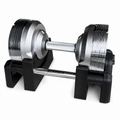
The aim was not simply to make another adjustable dumbbell. We wanted to address one of the category’s most persistent limitations by combining a block-shaped structure, secure magnetic locking pins and a maximum weight of up to 60kg per dumbbell.
Why People Worry About Dropping Adjustable Dumbbells
A fixed dumbbell has a relatively simple construction. Its handle and weight heads form one permanent unit, with few moving components.
An adjustable dumbbell has a more difficult engineering job. It must:
- Hold multiple removable weight plates securely
- Allow the user to select different weights
- Keep the selected plates locked during movement
- Release the unused plates cleanly
- Remain compact and comfortable to lift
- Continue operating reliably under heavy loads
This functionality is what makes adjustable dumbbells so useful, but it also explains why durability is an important consideration.
The challenge becomes greater as the maximum weight increases. A heavy dumbbell carries more energy into the floor than a lighter one, even when both are dropped from the same height.
For Stealth Block, impact resistance could not be treated as an afterthought. It had to influence the product architecture from the beginning.
A Technological Solution to Adjustable Dumbbell Impact Damage
Stealth Block was developed from a clear engineering brief:
Create an adjustable dumbbell that retains the space-saving benefits of a selector system but is considerably more resistant to impact.
That required more than adding protective material to an existing design. The complete system had to be considered, including the plate shape, handle, locking method, weight selection and the way impact forces travel through the dumbbell.
The resulting Stealth Block system combines:
- A compact block-shaped plate structure
- Magnetic locking pins on both sides of the handle
- Secure mechanical plate retention
- A maximum capacity of up to 60kg per dumbbell
- Consistent 2.5kg weight increments
- An adjustable base for different configurations
- A design engineered to survive a full-weight drop from over one metre
This is what makes Stealth Block a different type of adjustable dumbbell.
Impact resilience is not an additional feature applied at the end of development. It is one of the main problems the product has been designed to solve.
Stealth Block at a Glance
Feature |
Stealth Block specification |
Why it matters |
|---|---|---|
Maximum weight |
Up to 60kg per dumbbell |
Provides capacity for demanding strength training |
Weight increments |
2.5kg |
Supports structured progressive overload |
Available configurations |
Designed around 30kg, 40kg, 50kg and 60kg models |
Allows lifters to select an appropriate maximum weight |
Plate format |
Block-shaped plate system |
Creates a compact, stable adjustable format |
Selection system |
Magnetic locking pins on both sides |
Secures the selected plates to the handle |
Fine-adjustment plates |
Two 1.25kg plates |
Creates the intermediate 2.5kg settings |
Base |
Adjustable cradle |
Accommodates different dumbbell configurations |
Impact design target |
Full-weight drop from over one metre |
Addresses a common concern about adjustable dumbbell durability |
Production testing |
Tested from heights up to 2m |
Provides physical testing evidence behind the design direction |
How the Magnetic Locking System Works
Stealth Block uses a magnetic locking pin on each side of the handle.
The handle is placed fully into the adjustable base before each pin is moved to the required weight. Once both pins are completely engaged, the selected plates lift with the handle while the unused plates remain in the cradle.
The system must be adjusted while the handle is seated correctly in the base. Both magnetic pins must be pressed fully into position before the dumbbell is lifted.
Additional 1.25kg plates can be fitted into the handle slots. Using one plate on each side adds 2.5kg to the complete dumbbell, filling the intermediate settings between the main plate selections.
This creates a weight range that progresses in consistent 2.5kg increments.
The two-sided locking arrangement is important. The load remains symmetrical, while the pins provide a clear and deliberate method of securing the selected plates before lifting.
Designed to Survive a Full-Weight Drop
Stealth Block is being engineered to survive a drop at full weight from over one metre.
That requirement has influenced the structure of the complete dumbbell rather than being treated as a claim added after development.
The block-shaped plate design, handle construction and locking system have been developed to work together as one impact-resistant system.
This addresses a real training problem. During a heavy dumbbell press, for example, returning the weights gently to their base may not always be practical. A lifter approaching failure may need to release the dumbbells onto suitable protective flooring.
Stealth Block is intended to provide greater confidence in those situations.
It does not remove the need for controlled training, but it gives the product a considerably stronger response to the realities of heavy home strength work.
Tested From Heights Up to 2m
Claims about durability should be supported by physical testing.
During development, Stealth Block underwent testing at the production facility from heights of up to 2m, and it survived.
This testing exposed the complete adjustable dumbbell system to a significant impact. It allowed the production team to assess how the plates, handle and locking components behaved together under forces beyond an ordinary controlled set-down.
The result supports the central purpose of Stealth Block:
To provide a more impact-resistant solution for lifters who want the convenience of adjustable dumbbells without treating every hard landing as a potential equipment failure.
The full-weight design target and 2m production testing are related but distinct claims.
Stealth Block has been designed to survive a full-weight drop from over one metre. The product has also been tested from heights up to 2m during development.
We are not claiming that any strength product is impossible to damage. Selected weight, flooring, impact angle, repetition and landing position can all affect the forces passing through the equipment.
The important difference is that drop resilience has been built into the Stealth Block development process and physically tested.
Does This Mean Stealth Block Can Be Thrown?
No.
There is a difference between designing a dumbbell to survive a heavy landing and encouraging someone to throw it unnecessarily.
Stealth Block is more resistant to impact, but users should still:
- Lower the dumbbell under control whenever possible
- Train over suitable protective gym flooring
- Keep feet and other people clear of the landing area
- Check that both magnetic pins are fully engaged before every lift
- Inspect the handle, plates and pins after a severe impact
- Stop using the dumbbell if any component appears damaged
The objective is to make a full-weight accidental or necessary drop less likely to end the life of the equipment.
It is not an invitation to deliberately abuse it.
Why Build a 60kg Adjustable Dumbbell?
Many adjustable dumbbells are designed around general home fitness. Stealth Block is being developed for people who require considerably more loading capacity.
A maximum weight of up to 60kg per dumbbell supports demanding movements such as:
- Flat dumbbell presses
- Incline dumbbell presses
- One-arm dumbbell rows
- Bulgarian split squats
- Romanian deadlifts
- Heavy goblet squats
- Dumbbell floor presses
- Loaded carries
These are also the movements during which returning a heavy dumbbell gently to its base can become difficult.
The heavier the training becomes, the more important secure plate retention, predictable adjustment and impact resilience become.
Stealth Block brings those requirements together in one compact system.
30kg to 60kg Configurations
The Stealth Block instructions cover 30kg, 40kg, 50kg and 60kg models.
This allows the same core system to support different training requirements without forcing every user into the highest-capacity configuration.
The adjustable cradle can be set to match the relevant model. The main plates provide the larger weight changes, while the two removable 1.25kg plates create the intermediate settings.
At its highest configuration, Stealth Block provides a substantial training range without requiring a full rack of fixed dumbbells.
How Stealth Block Fits Within the Stealth Range
Stealth Block is being created for a distinct type of training. It does not replace the purpose of the existing Stealth systems.
The current Stealth adjustable dumbbell collection provides different combinations of weight range, increment size, materials and adjustment style.
Stealth Block introduces a separate proposition:
- A block-shaped format
- A magnetic pin selection system
- Capacity extending to 60kg per dumbbell
- Consistent 2.5kg weight increments
- Greater resistance to impact
- A design developed to survive a full-weight drop from over one metre
- Production testing from heights up to 2m
This gives heavier home gym users another option without suggesting that every lifter needs the same type of adjustable dumbbell.
Someone prioritising smaller weight increases or a more traditional dumbbell profile may prefer another model within the Stealth range.
Someone prioritising maximum load, a block-shaped design and impact resilience may find Stealth Block better suited to the way they train.
Durability Should Include Long-Term Support
Durability is not only about surviving a single impact. It is also about what happens after years of use.
A long-term equipment system should be inspectable, maintainable and supported. If a replaceable component eventually wears or suffers damage, the complete dumbbell should not automatically become waste.
This principle supports the wider Stealth approach to replacement parts, repairs and aftercare.
Customers can use the Stealth Help Centre to keep product questions, troubleshooting and support in one place.
You can also visit the genuine replacement parts and support page for information about parts and product support across the Stealth range.
Solving One of the Biggest Adjustable Dumbbell Problems
Adjustable dumbbells offer exceptional space efficiency, but many lifters remain concerned about how selector systems respond to impact.
Stealth Block has been developed as the solution to that problem.
Its block-shaped structure, magnetic locking system and high-capacity design have been engineered to provide greater resistance to impact.
The system is designed to survive a full-weight drop from over one metre and has been tested from heights of up to 2m at the production facility.
Combined with configurations extending to 60kg per dumbbell and practical 2.5kg increments, Stealth Block introduces a new technological solution for serious home lifters who need compact equipment without ignoring the realities of heavy training.
The objective is simple:
An adjustable dumbbell should save space without becoming the weak point in your home gym.
Frequently Asked Questions
Can Stealth Block adjustable dumbbells be dropped?
Stealth Block is designed to survive a full-weight drop from over one metre. The system has also undergone production-facility testing from heights up to 2m.
Controlled lowering and suitable protective flooring are still recommended.
Is Stealth Block drop-proof?
“Drop-proof” can imply that a product cannot be damaged under any possible conditions.
The more accurate description is that Stealth Block is more resistant to impact and has been developed specifically to survive the type of full-weight drop that can occur during heavy training.
What is the maximum Stealth Block weight?
The system is designed to include configurations up to 60kg per dumbbell. The supplied instructions cover 30kg, 40kg, 50kg and 60kg models.
How does Stealth Block change weight?
A magnetic locking pin on each side of the handle slides into the required weight position while the handle is seated in its base.
Both pins must be fully engaged before lifting.
What increments does Stealth Block use?
Stealth Block adjusts in 2.5kg increments.
Two additional 1.25kg plates are fitted symmetrically, with one plate on each side of the handle, to create the intermediate settings.
Does surviving a 2m test mean Stealth Block cannot break?
No strength product is immune to every possible weight, surface, angle or repeated impact.
The test demonstrates that Stealth Block survived the development testing conducted from heights up to 2m. It supports the product’s impact-resistant design without suggesting that damage is impossible under every condition.
When will Stealth Block be available?
Stealth Block is currently being developed, and is due in November 2026.
On Google
Make us a preferred source
Add Assassin Goods as a preferred source on Google and our training intel and gear guides show up more often in your results. One tap, free, and you can undo it any time.