What Is a 21-15-9 Workout? Format, Pacing and Examples

A 21-15-9 workout uses three descending rounds: 21 reps, 15 reps and 9 reps of each movement. This guide explains the format, total reps, pacing, scaling and practical examples for gym or home training.
A 21-15-9 workout is a three-round descending rep scheme. Complete 21 reps of every movement, then 15 reps of every movement, then 9 reps of every movement. It is often performed for time, but the format also works as an untimed strength-endurance session when technique matters more than speed.
With two exercises, you complete 45 reps of each movement and 90 working reps in total. The structure is simple. Pacing it well is not.
How Does a 21-15-9 Workout Work?
Work through the listed movements in order during each round. If the workout contains dumbbell front squats and floor presses, the sequence is 21 squats, 21 presses, 15 squats, 15 presses, 9 squats and 9 presses.
| Round | Exercise A | Exercise B | Reps in Round | Running Total |
|---|---|---|---|---|
| 1 | 21 reps | 21 reps | 42 | 42 |
| 2 | 15 reps | 15 reps | 30 | 72 |
| 3 | 9 reps | 9 reps | 18 | 90 |
| Total | 45 reps | 45 reps | 90 | 90 |
If the workout uses one exercise, the total is 45 reps. With three exercises, it is 135 reps. Calculate the workload before starting rather than judging the session from the final 9-rep round.
Why Does the 21-15-9 Format Feel So Difficult?
The first round contains 21 of the 45 reps for each movement, which is almost 47% of the total workload. Starting too fast can create enough fatigue to slow both later rounds, even though the repetition target is falling.
The format also makes poor exercise pairings obvious. Two movements that heavily tax the same muscles, grip or lower back can make a sensible load feel much harder by the second round. The descending numbers help mentally because the finish gets closer, but they do not remove accumulated fatigue.
A 21-15-9 workout can be useful for conditioning, muscular endurance or time-efficient accessory work. It is not a substitute for low-repetition strength training when the goal is maximal force production.
Three Practical 21-15-9 Workout Examples
| Workout | Movement 1 | Movement 2 | Best Suited To | Simple Scale |
|---|---|---|---|---|
| Bodyweight | Air squat | Press-up | Minimal-equipment conditioning | Elevate the hands for press-ups |
| Dumbbell | Dumbbell front squat | Dumbbell floor press | Home gym strength-endurance | Reduce the load or use one dumbbell |
| Mixed conditioning | Dumbbell deadlift | Burpee | Experienced trainees with sound technique | Step back during the burpee |
The dumbbell version works particularly well in a compact home gym because adjustable dumbbells let you reduce the load quickly if the first round shows that your initial choice was too ambitious.
How Heavy Should You Go?
There is no universal 21-15-9 weight. The correct load depends on the movements, your training history and whether the session is intended to be fast conditioning or controlled strength-endurance.
Choose a load you could complete for 21 technically sound repetitions when fresh, with a few repetitions still available. That does not mean the first round must be unbroken. Planned sets are often better than reaching failure early.
If a published workout lists an RX load, treat it as the prescribed version of that specific workout, not as a personal recommendation. Scale it when the load prevents consistent range of motion, position or control.
High-repetition technical lifts require particular care. Avoid using near-maximal loads, and stop the set if fatigue changes the movement into something you would not accept during ordinary training.
How to Pace a 21-15-9 Workout
The best pace is the fastest one you can sustain without technique breaking down. Sprinting the opening 21 reps and then standing still is rarely efficient.
Plan the 21-rep round before starting
If 21 unbroken reps are uncertain, use deliberate sets such as 8-7-6 or 7-7-7. Short, planned breaks are usually quicker than an unplanned stop after reaching failure.
Keep the 15-rep round controlled
The middle round is where early pacing decisions become visible. An 8-7 split or three sets of 5 can protect technique while keeping breaks short.
Earn the final 9 reps
Complete the last round without stopping only when the movement remains sound. Nine rushed repetitions with poor control are not better than a clean 5-4 split.
Control transitions
Place equipment where it can be reached safely, know which movement comes next and avoid changing the setup between rounds. Efficient transitions can save time without forcing a reckless work rate.
How Beginners Can Scale 21-15-9 Workouts
Beginners can use the format, but the original repetition count does not need to be protected at all costs. Scale the part that prevents good training.
- Reduce the repetitions: Use 15-12-9 or 12-9-6.
- Reduce the load: Choose a weight that keeps every repetition controlled.
- Change the movement: Elevate press-ups, use a box squat or step back during burpees.
- Remove the clock: Complete the session for quality rather than time.
- Reduce the exercise count: Start with one movement if two exercises create too much volume.
A scaled workout that preserves position and range of motion is more useful than completing the written version badly.
Common 21-15-9 Mistakes
- Starting at an unsustainable pace: The first 21 reps are almost half the workout.
- Choosing a load based on the final round: A weight that feels easy for 9 may be inappropriate for 21.
- Pairing two highly fatiguing movements: Consider muscle groups, grip and lower-back demand.
- Waiting for failure before resting: Decide likely set breaks in advance.
- Chasing a time at the expense of technique: The clock is useful only when repetitions remain comparable.
Frequently Asked Questions
What does 21-15-9 mean?
It means three rounds of work. Complete 21 reps of each exercise, then 15 reps of each exercise, then 9 reps of each exercise.
How many total reps are in a 21-15-9 workout?
Each movement totals 45 reps. A workout with two exercises contains 90 working reps, while three exercises produce 135 reps.
How long should a 21-15-9 workout take?
There is no universal target. The time depends on the exercises, load, movement standards and athlete. Compare repeat attempts only when those variables remain consistent.
Is 21-15-9 only for CrossFit?
No. The format is strongly associated with CrossFit and functional fitness, but it is simply a descending repetition structure that can be used in many training styles.
Can a 21-15-9 workout build strength?
It can support muscular endurance and provide useful accessory volume. For maximal strength, it should sit alongside a progressive programme built around heavier loads and lower repetition sets.
Build a Better Home 21-15-9 Setup
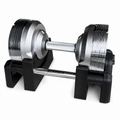
A pair of Stealth adjustable dumbbells makes it easy to match the load to the workout instead of forcing one fixed weight across every movement. For a detailed comparison of the available ranges and upgrade paths, use the adjustable dumbbells UK buyer's guide.
On Google
Make us a preferred source
Add Assassin Goods as a preferred source on Google and our training intel and gear guides show up more often in your results. One tap, free, and you can undo it any time.