Best Home Gym Flooring For Weight Training UK 2026

Weight training flooring does two jobs: it protects your actual floor from dropped weights and repeated impact, and it protects your equipment's mechanism from the shock of being set down hard, over and over. Get the wrong flooring and you risk cracked subfloors, damaged joists, or, for adjustable dumbbells and kettlebells specifically, extra stress on a locking mechanism that's already handling regular impact.
Here's how to pick the right flooring for a home gym built around weight training.
Quick Answer
- Budget/light use: 15mm interlocking multi-layered mat
- Most versatile for dumbbells and kettlebells: 20mm Sprung PRO Interlocking Tiles, supports up to 140kg
- Premium finish: Onyx EPDM Premium Rubber Gym Tiles, 20mm
- Heaviest use / dropped weights: 43mm Sprung PRO Rubber AntiShock Tile, rated for drops up to 250kg
Why Flooring Matters More Than People Expect
Adjustable dumbbells and kettlebells get set down, sometimes hard, far more often per session than a single fixed weight would. Thin or unsuitable flooring transfers more of that impact into both the subfloor and the equipment's mechanism, which is one of the more overlooked causes of premature wear on adjustable systems. Good flooring reduces that impact before it reaches either.
Choosing The Right Thickness
Flooring thickness is really a proxy for how much impact it's designed to absorb:
Thickness |
Best for |
Typical rating |
|---|---|---|
15mm |
Light dumbbell and kettlebell work, general home gym use |
Entry-level |
20mm |
Regular dumbbell/kettlebell training, moderate impact |
Supports up to 140kg |
30mm |
Heavier training, higher impact activity |
Medium-high impact |
43mm |
Dropped weights, Olympic lifting, CrossFit-style training |
Withstands drops up to 250kg |
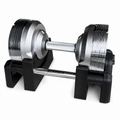
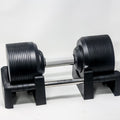
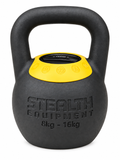
For most home gym users training with Stealth Adjustable Dumbbells and Stealth Adjustable Kettlebells, 20mm tiles strike the right balance, enough protection for regular training without the cost or bulk of the heaviest-duty options, which are really built for weights being dropped from height rather than set down.
Interlocking Vs Loose-Lay
Most quality gym tiles, including the Sprung PRO Interlocking range, use hidden connector inserts that lock tiles together underneath, creating a seamless surface that won't shift under a dumbbell stand or bench. This matters if you're also running a dumbbell stand or bench on the same flooring, since a shifting tile under a stand's feet is a stability risk, not just a cosmetic one.
Colour And Finish Options
Flooring doesn't have to be purely functional. Options like the Seahawk Premium Fleck tile add a coloured fleck finish while keeping the same protective properties, useful if your home gym is a shared or visible space rather than a garage.
Frequently Asked Questions
Do I need thick flooring for adjustable dumbbells specifically?
Not necessarily thick, but suitably rated. 20mm interlocking tiles rated to 140kg cover most home gym dumbbell and kettlebell training. Only move to 30–43mm tiles if you're regularly dropping weights from height or doing Olympic lifting.
Can I put a dumbbell stand directly on gym flooring tiles?
Yes, provided the tiles are properly interlocked so they don't shift under the stand's feet. Loose or poorly connected tiles are the main risk here, not the flooring material itself.
How long does gym flooring typically last?
Most quality rubber gym tiles carry a warranty against premature cracking and colour defects, commonly around 4 years, with a realistic lifespan well beyond that under normal home use.
Where can I buy gym flooring in the UK?
The full flooring range is available through Assassin Goods.
Related products


On Google
Make us a preferred source
Add Assassin Goods as a preferred source on Google and our training intel and gear guides show up more often in your results. One tap, free, and you can undo it any time.