What Exercises Can I Do With Adjustable Dumbbells?

What Exercises Can I Do With Adjustable Dumbbells?
You can use adjustable dumbbells to train every major muscle group at home. Chest presses, rows, shoulder presses, squats, lunges, Romanian deadlifts, curls, tricep extensions and loaded carries can all be performed with one compact pair.
The main advantage is not simply the number of exercises available. It is the ability to use a lighter weight for smaller muscles, a heavier weight for compound movements and gradually increase the resistance as you become stronger.
This guide explains which adjustable dumbbell exercises train each part of the body, how to combine them into a workout and how to progress without constantly changing your routine.
Adjustable Dumbbell Exercises at a Glance
Area trained |
Adjustable dumbbell exercises |
Main movement |
|---|---|---|
Chest |
Floor press, bench press, incline press and fly |
Pressing |
Back |
One-arm row, bent-over row, pullover and reverse fly |
Pulling |
Shoulders |
Overhead press, lateral raise, front raise and rear-delt fly |
Pressing and raising |
Biceps |
Supinated curl, hammer curl and concentration curl |
Elbow flexion |
Triceps |
Overhead extension, lying extension, close-grip press and kickback |
Elbow extension |
Quadriceps |
Goblet squat, front squat, split squat and reverse lunge |
Squatting and lunging |
Hamstrings and glutes |
Romanian deadlift, single-leg deadlift, hip thrust and glute bridge |
Hinging and hip extension |
Calves |
Standing calf raise and single-leg calf raise |
Ankle extension |
Core |
Suitcase hold, farmer’s carry, renegade row and controlled Russian twist |
Bracing and resisting movement |
Full body |
Thruster, dumbbell clean, walking lunge and squat-to-press |
Combined movements |
Upper-Body Adjustable Dumbbell Exercises
Dumbbell Floor Press
The floor press trains the chest, triceps and front shoulders without requiring a bench.
Lie on the floor with one dumbbell in each hand. Keep your feet planted, bring your upper arms gently into contact with the floor and press the dumbbells upwards. Lower them under control until your upper arms return to the floor.
The floor limits the available range, which can make the movement easier to control than a full bench press. It is a useful starting point for a home gym with limited equipment.
Dumbbell Bench Press
A flat bench press provides a greater range than a floor press and allows the elbows to travel below the torso.
Keep your feet secure, shoulder blades supported and wrists positioned over your elbows. Lower the dumbbells under control before pressing them back above the chest.
A bench is useful, but it is not essential for beginning adjustable dumbbell training.
Incline Dumbbell Press
Setting a suitable bench at an incline shifts more work towards the upper chest and front shoulders.
Avoid making the angle unnecessarily steep. A very upright bench can turn the movement into more of a shoulder press.
Dumbbell Fly
A fly trains the chest using an arcing movement rather than a conventional press.
Use less weight than you would for pressing. Maintain a slight bend in the elbows and stop at a range you can control comfortably. The purpose is not to lower the dumbbells as far as possible.
One-Arm Dumbbell Row
The one-arm row trains the lats and middle back while allowing the free hand to support your torso.
Place one hand on a stable bench or solid surface. Allow the working arm to extend towards the floor, then pull the dumbbell towards your hip without sharply rotating your torso.
Lower the weight deliberately rather than letting it drop.
Two-Arm Bent-Over Row
This variation trains both sides together and requires your spinal erectors to stabilise the bent-over position.
Push your hips backwards, keep your torso controlled and pull both dumbbells towards your lower ribs. If your lower back becomes the limiting factor, use supported one-arm rows instead.
For a more complete approach to back development, read our guide to building a bigger back with adjustable dumbbells.
Dumbbell Pullover
A pullover trains shoulder extension and can provide useful work for the lats and chest.
Hold one dumbbell securely above your chest, then lower it behind your head while maintaining a slight bend in the elbows. Stop at a comfortable range and return the weight above your chest.
Avoid turning the exercise into a large lower-back arch.
Dumbbell Shoulder Press
The shoulder press trains the shoulders and triceps.
It can be performed standing or seated. Keep the wrists stacked over the elbows and avoid using excessive leg drive unless you are intentionally performing a push press.
Standing requires more trunk stability. Seated pressing makes it easier to focus on the shoulders.
Dumbbell Lateral Raise
Lateral raises target the side of the shoulders and generally require a much lighter weight than presses or rows.
Raise the dumbbells outwards with soft elbows. Stop around shoulder height and lower them under control. Avoid swinging the body to move more weight.
Reverse Fly
The reverse fly trains the rear shoulders and upper back.
Hinge forwards, maintain a stable torso and raise the dumbbells out to the sides. Use a manageable weight and avoid turning the movement into a shrug.
Bicep Curl
Hold the dumbbells with your palms facing forwards and bend your elbows to raise the weights.
Keep the upper arms reasonably still. If the torso must swing on every repetition, reduce the load or stop the set.
Hammer Curl
Hammer curls use a neutral grip with the palms facing each other. They train the biceps, brachialis and muscles of the forearm.
The movement can be performed with both arms together or one side at a time.
Overhead Tricep Extension
Hold one dumbbell securely above your head. Bend your elbows to lower it behind you, then extend the elbows to return to the starting position.
Keep the upper arms controlled and use a range that feels comfortable for your shoulders and elbows.
Close-Grip Dumbbell Press
Hold the dumbbells close together above the chest and perform a pressing movement. The closer arm position places additional emphasis on the triceps while still training the chest.
Lower-Body Adjustable Dumbbell Exercises
Goblet Squat
Hold one dumbbell vertically in front of your chest. Sit between your hips while keeping your feet planted and your torso controlled.
The goblet squat is straightforward to learn and works well when one dumbbell provides enough resistance.
As you become stronger, grip strength or the position of the dumbbell may limit the exercise before your legs do. At that point, move to two-dumbbell squats or unilateral exercises.
Two-Dumbbell Front Squat
Hold one dumbbell at each shoulder and squat through a controlled range.
This variation allows more total resistance than a goblet squat and distributes the load across both sides of the body.
Reverse Lunge
Step one foot backwards, lower the rear knee towards the floor and drive through the front leg to return.
Reverse lunges often feel more controlled than forward lunges because the front foot remains planted.
Hold the dumbbells by your sides or at your shoulders.
Bulgarian Split Squat
Place the rear foot on a stable bench or low platform and lower through the front leg.
This exercise can make relatively light dumbbells challenging because one leg performs most of the work. Start without weights if you need to develop balance and movement control.
Dumbbell Romanian Deadlift
Hold the dumbbells in front of your thighs. Push your hips backwards while keeping the weights close to your legs and maintaining a neutral spine.
Descend until you feel a strong hamstring stretch without losing position, then drive the hips forwards to stand.
The movement comes from the hips. It is not a squat, and additional depth is not useful if it requires rounding the back.
Single-Leg Romanian Deadlift
The single-leg variation trains the hamstrings, glutes, feet and balance.
Begin with a light dumbbell and use your free hand for support if necessary. Keep the hips controlled rather than allowing the pelvis to rotate as the rear leg moves backwards.
Dumbbell Hip Thrust
Support your upper back on a stable bench and position a dumbbell securely across the hips. Lower the hips under control, then drive them upwards by contracting the glutes.
Use padding between the dumbbell and your body if required.
Dumbbell Glute Bridge
A floor-based glute bridge is an accessible alternative to the hip thrust.
Lie on your back, bend your knees and place a dumbbell securely across the hips. Push through your feet and raise the hips without excessively arching your lower back.
Standing Calf Raise
Hold the dumbbells by your sides and raise your heels from the floor.
Pause at the top and lower slowly. A single-leg version increases the challenge without requiring substantially heavier dumbbells.
Core and Functional Dumbbell Exercises
Suitcase Hold
Hold one dumbbell at your side and stand upright without leaning towards or away from the weight.
This trains the core by resisting sideways movement. Keep your ribs stacked over your pelvis and maintain even pressure through both feet.
Farmer’s Carry
Hold a dumbbell in each hand and walk through a clear space using controlled steps.
Farmer’s carries train the grip, trapezius and trunk while placing the whole body under load. If space is limited, perform a timed farmer’s hold instead.
Renegade Row
Begin in a press-up position with your hands supported on stable dumbbells. Brace the torso and row one dumbbell without allowing your hips to rotate excessively.
This is an advanced exercise. The dumbbells must be stable, the floor must provide sufficient grip and you should use a manageable load. A supported one-arm row is a better choice if stability is uncertain.
Controlled Russian Twist
Sit with the torso slightly reclined and hold one dumbbell securely. Rotate through a controlled range rather than swinging the weight rapidly from side to side.
People with back problems may need a different core exercise. Suitcase holds provide a simpler alternative.
Dumbbell Thruster
A thruster combines a squat with an overhead press.
Squat with the dumbbells at your shoulders, stand powerfully and continue into the press. This makes it useful for full-body conditioning, although it is less suitable for isolating an individual muscle group.
Dumbbell Clean
The dumbbell clean moves the weights from a hanging position to the shoulders using coordinated hip and upper-body movement.
It requires more skill than a basic squat, row or press. Learn the movement with light weights and sufficient clear space before increasing the load.
How to Turn These Exercises Into a Balanced Workout
Do not simply select six exercises for the muscles you enjoy training most. A balanced full-body session should contain several fundamental movement patterns.
Movement pattern |
Example |
|---|---|
Squat or lunge |
Goblet squat, front squat or reverse lunge |
Hip hinge |
Romanian deadlift |
Horizontal press |
Floor press or bench press |
Pull |
One-arm row or bent-over row |
Vertical press |
Shoulder press |
Core or carry |
Suitcase hold or farmer’s carry |
Beginner Full-Body Adjustable Dumbbell Workout
Perform this workout two or three times per week with at least one recovery day between sessions.
Exercise |
Sets |
Repetitions |
|---|---|---|
Goblet squat |
3 |
8–12 |
Dumbbell floor press |
3 |
8–12 |
One-arm dumbbell row |
3 |
8–12 per side |
Dumbbell Romanian deadlift |
3 |
8–12 |
Seated shoulder press |
2 |
8–12 |
Suitcase hold |
2 |
20–40 seconds per side |
Beginners can initially perform two sets of each exercise while learning the movements. Add a third set when your technique and recovery are consistent.
Upper-Body Adjustable Dumbbell Workout
Exercise |
Sets |
Repetitions |
|---|---|---|
Dumbbell floor or bench press |
3 |
8–12 |
One-arm row |
3 |
8–12 per side |
Shoulder press |
3 |
8–12 |
Reverse fly |
2–3 |
12–20 |
Hammer curl |
2–3 |
10–15 |
Overhead tricep extension |
2–3 |
10–15 |
Lower-Body Adjustable Dumbbell Workout
Exercise |
Sets |
Repetitions |
|---|---|---|
Two-dumbbell front squat |
3 |
8–12 |
Romanian deadlift |
3 |
8–12 |
Reverse lunge |
3 |
8–12 per side |
Glute bridge or hip thrust |
3 |
10–15 |
Standing calf raise |
3 |
12–20 |
Suitcase hold |
2 |
20–40 seconds per side |
How Heavy Should Your Dumbbells Be?
There is no single correct dumbbell weight for every exercise.
Large compound movements such as rows, squats and Romanian deadlifts normally allow more resistance than lateral raises, reverse flies and tricep kickbacks.
Choose a load that lets you:
- Complete the target repetition range
- Control the lifting and lowering phases
- Maintain a stable body position
- Finish with approximately one to three good repetitions available
- Feel the intended muscles working
If you could perform many more repetitions, the weight may be too light for that target range. If your technique breaks down before reaching the bottom of the range, it is probably too heavy.
Our dumbbell weight selection guide provides more detailed starting guidance.
How to Progress Your Adjustable Dumbbell Workouts
Progress does not require changing the programme every week. It requires gradually asking your body to do more.
Use the following progression:
- Select a weight you can control for the lower end of the target range.
- Keep the same weight while adding repetitions over subsequent workouts.
- Once every set reaches the top of the range, increase the resistance.
- Return towards the lower end of the repetition range.
- Repeat the process.
For example, with three sets of 8–12 repetitions:
- First workout: 10, 9 and 8 repetitions
- Later workout: 11, 10 and 10 repetitions
- Later workout: 12, 12 and 12 repetitions
- Next workout: increase the weight and begin again at approximately 8–10 repetitions
You can also increase difficulty by:
- Adding a set
- Slowing the lowering phase
- Pausing in the most difficult position
- Using a longer controlled range
- Moving from bilateral to single-leg exercises
- Reducing rest periods when conditioning is the goal
Do not change several variables at once. A simple training log makes it easier to identify genuine progress.
Turn the Exercise List Into a Structured Programme
Knowing individual exercises is useful. Following a structured programme removes the need to decide what to train every time you enter your home gym.
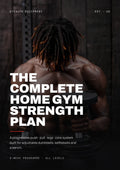
The Complete Home Gym Strength Plan is an eight-week training PDF built around adjustable dumbbells, a kettlebell and a bench. It includes:
- A four to five-day weekly structure
- Push, pull, legs and core training
- Beginner, intermediate and advanced options
- Warm-up guidance
- Sets, repetitions and effort targets
- Progressive-overload guidance
- Recovery and deload advice
- A movement library
It suits people who prefer to purchase a complete programme once and work through a defined eight-week block.
For training that lives on your phone, explore the Stealth Training System app and Training Hall. Available plans cover general strength, full-body training, kettlebells, fat loss, lifelong strength, lower-body training and shorter sessions for busy weeks.
Inside the app you can:
- View the day’s planned session
- Record weights, repetitions and effort
- Log workout scores
- Use stopwatch, AMRAP, EMOM and Tabata timers
- Track personal bests and performance trends
- Review your training heatmap
- Record sessions offline and synchronise later
The three-day adjustable dumbbell plan is currently free, while additional programmes are available through the Training Hall.
You can compare the app-based plans and one-off downloadable guides in the Assassin Goods Digital Hub.
What Equipment Do You Need?
You can perform a productive workout using only a pair of dumbbells and enough clear floor space.
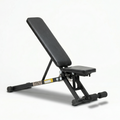
A bench expands the available exercise range by adding movements such as:
- Flat and incline presses
- Supported rows
- Seated shoulder presses
- Bulgarian split squats
- Hip thrusts
A mat can make floor exercises more comfortable. A stand can make weight selection and lifting the dumbbells into position more convenient, but neither is essential.
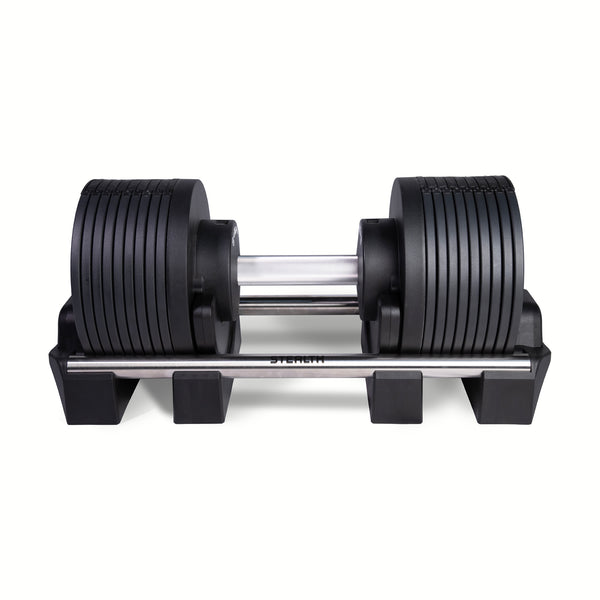
If you are still choosing your equipment, compare the available Stealth adjustable dumbbells by weight range, construction and upgrade route.
Adjustable Dumbbell Training Mistakes to Avoid
Using the Same Weight for Every Exercise
Your shoulders may require much less resistance than your legs or back. Adjust the dumbbells to suit the movement rather than trying to complete the entire workout at one setting.
Performing Every Set as Quickly as Possible
Speed can be useful for intentional power or conditioning work, but it should not replace control. Most strength exercises benefit from a stable position and deliberate lowering phase.
Changing Exercises Constantly
Exercise variety can keep training interesting, but excessive variation makes progress difficult to measure.
Keep your main squats, hinges, presses and rows consistent for several weeks. Change an exercise when there is a reason, not simply because the movement is familiar.
Ignoring Single-Leg and Single-Arm Exercises
Unilateral exercises increase the challenge without always requiring heavier weights. Split squats, lunges, single-leg Romanian deadlifts and one-arm rows are particularly useful when equipment capacity is limited.
Training Without Recording Your Performance
If you cannot remember the previous weight and repetition total, you cannot reliably judge whether you are progressing.
Use a notebook or record each workout in the Stealth Training System app.
Adjustable Dumbbell Safety
Before each workout:
- Confirm that the selected plates are securely attached.
- Keep the dumbbells in their bases while changing the weight.
- Inspect the handles, plates and bases for visible damage.
- Clear sufficient space around your training area.
- Use a stable bench or support where required.
- Warm up with lighter sets before heavier work.
- Control the dumbbells when returning them to the floor or base.
- Do not drop selector-based adjustable dumbbells.
Stop if you experience sharp or unusual pain. This guide provides general exercise information and is not a substitute for personalised medical or coaching advice.
Are Adjustable Dumbbells Enough for a Full-Body Workout?
Yes. Adjustable dumbbells can train every major muscle group and support strength, muscle development and conditioning at home.
A well-designed programme should include:
- A squat or lunge
- A hip hinge
- A press
- A row
- Shoulder and arm work where appropriate
- Core bracing or loaded carries
The equipment gives you the exercise options. Consistent training, suitable resistance, recovery and measured progression determine what you achieve with them.
Start with the exercises in this guide if you want to construct your own workouts. If you want the complete structure prepared for you, choose the eight-week Complete Home Gym Strength Plan or explore the programmes available through the Stealth Training System app.
Related products


On Google
Make us a preferred source
Add Assassin Goods as a preferred source on Google and our training intel and gear guides show up more often in your results. One tap, free, and you can undo it any time.